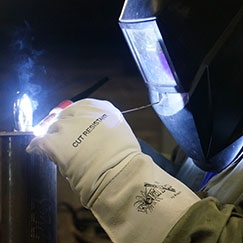
Heat Resistant Gloves
Finding the right heat resistant work gloves to protect your hands from hot surfaces and materials involves considering several factors. Safety is the top concern, as handling dangerously hot pipes or heating equipment can cause serious burns in seconds if your hands are unprotected. Consider jobsite variables like:
- Temperature of hot objects
- Weight of hot objects
- Frequency of the task being performed
- The grip you need to handle hot objects
- Amount of time holding hot objects
So if your job requires gripping an extremely hot and heavy object for more than a few seconds, look for a glove that gives you a higher level of protection.
What Level of Heat Protection Do My Gloves Need?
When comparing heat resistant gloves, Magid has made it easy by categorizing flame, heat, and thermal resistance into four levels of protection consideration:
- Heat Resistance: These gloves are recommended for working around heat, but not flames. For example, if you bump your hands into a hot object, but the surrounding work environment doesn’t contain sparks or flames, Contact Heat Level 1 gloves are a worthwhile choice. However, you shouldn’t use a glove like this around sparks and flames because they can cause the glove material to melt.
- General Fire Hazards: Gloves in this tier are rated according to the ASTM D6413 FR standard for use with any job with a fire hazard. This means the glove will resist ignition if it comes into contact with sparks or flames and self-extinguish. Many items in the Magid FR collection reach this level of protection.
- Arc Flash Hazards: This tier is based on NFPA 70E (Categories 1-4) and ASTM F1506 ratings. These gloves are typically used for electrical, utilities, and public works tasks, meaning they’re rated against the potential for arc flash. Since they can’t be conductive, these gloves can’t have any metal in them, so they’re typically made with a core material like fiberglass.
- Flash Fire Hazards: Gloves in this tier are NFPA 2112 Rated and UL Certified for use in oil and gas, chemical, petrochemical, and manufacturing work.
When comparing heat resistant glove levels, the ASTM F1060 and EN 407 testing methods give you an easy guideline for finding the level of protection you need for your application.
ASTM F1060
|
Level 0
|
<176⁰ F (80⁰C) |
| Level 1 |
176⁰ F (80⁰C) |
| Level 2 |
284⁰ F (140⁰C) |
| Level 3 |
392⁰ F (200⁰C) |
| Level 4 |
500⁰ F (260⁰C) |
| Level 5 |
608⁰ F (320⁰C) |
EN 407
| Rating 1 |
212⁰ F (100⁰C) |
| Rating 2 |
482⁰ F (250⁰C) |
| Rating 3 |
662⁰ F (350⁰C) |
| Rating 4 |
932⁰ F (500⁰C) |
What are the Benefits of Different Heat Resistant Glove Materials?
Once you know the level of protection you need, consider different types of heat-resistant materials that match your application and comfort preference.
| Material |
Pros |
Cons |
| AeroDex FR® |
- No irritation or discomfort
- Lightweight
- Breathable
- Foam neoprene palm
|
- Not NFPA 70E, Arc Flash rated
|
| Leather |
- Has natural flame-resistant properties with good abrasion protection
- Aluminized leather as well as para-aramid lined leather are options
- Can be one of the most affordable shell materials (un-lined)
|
- Traps heat close to the skin
- Can harden from heat over time
- Doesn’t have a high-degree of cut resistance
- Provides less dexterity than some other glove materials
|
| Terrycloth |
- Looped knitting traps air and creates more insulation
- Has some degree of cut and abrasion protection
- Comfortable to wear
- Most affordable option for thermal protection
|
- May absorb liquids and become saturated
- Not as dexterous as other materials
|
| Aramid |
- Inherently flame resistant
- High degree of cut resistance and dexterity
|
- More costly than other materials noted
|
| Acrylic |
- Glove liners add insulation for high heat contact as well as improved durability
|
- Can feel heavy when formed as a glove shell
|
| Aramax |
- Draws heat away from the skin
- Can be designed for added flame resistance
- Great for warm environments where flames and sparks are present
|
- Not designed for high heat applications
|
Other Heat Resistant Glove Types
Aluminized gloves are a higher heat glove used for hand and arm protection against molten metal splash, spatter, slag, and similar hazards. Their distinctive reflective backing reflects the radiant heat from these hazards so the inside of your hands and wrists won’t become uncomfortably hot due to trapped heat. These types of gloves are essential for smelting operations, glassmaking, heavy-duty welding, and foundry work.
Hot mill gloves are designed for intermittent contact heat protection for temperatures typically up to 400⁰ F. Using multiple layers of heat-resistant materials like cotton fabrics or burlap liners to insulate your hands, they’re often used in high-temperature industrial environments such as foundries and steel mills.
Different Types of Leather
Leather welding gloves can be made from different animal hides, each having their own benefits and best uses:
- Cowhide Leather: The most common hide material used for welding gloves, cowhide leather is durable, flexible, and has strong heat resistance
- Goat Leather: Despite its ultra-thin feel, goatskin leather is strong and can provide flexibility as well as abrasion resistance
- Deer Leather: Deerskin leather is very comfortable and flexible, making it perfect for tasks that require more tactile sensitivity
- Pig Leather: Pigskin leather is praised for its water resistance, making it an excellent choice for working in humid, damp, or wet environments
Heat Resistance Levels of Different Palm Coatings
While glove materials have different heat, flame, and thermal resistance properties, palm coatings can also be designed materials that have their own heat resistance properties.
| Palm Coating |
Temperature Rating |
| Nitrile |
Standard temperature range is -40⁰ F - 250⁰ F. Can also withstand dry heat up to 275⁰ F. |
| Neoprene |
Standard temperature range is -40⁰ F - 250⁰ F.
Note: Neoprene doesn’t start to burn until it reaches 500⁰ F
|
| Polyurethane |
Can be used in temperatures ranging from -80⁰ F - 200⁰ F |
| High-Temperature Silicone |
Can withstand temperatures up to 572⁰ F for intermittent periods |
| Natural Rubber |
Can withstand temperatures up to 250⁰ F |
Note that you should always refer to a glove’s specifications sheet for specific temperature ratings.
Explore selections from Magid as well as MCR Safety, Ansell, NSA, and others to find contact heat resistant gloves for handling hot materials and objects!