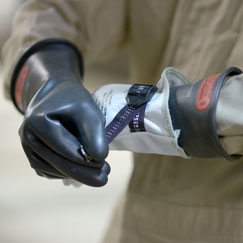
Electrical Safety Gloves and Leather Protector Gloves
Electricians, utility linemen, and other workers are surrounded by hazards on the jobsite that can cause electrical shocks or arc flashes, which can lead to significant burns and, in severe cases, fatalities. In addition to arc flash and flame resistant (FR) clothing suited for your work environment, electrical gloves like rubber insulating gloves can offer additional protection while working on electrical circuits and conductors.
Classifications and Categorizations for Electrical Gloves
When choosing the right electrical safety gloves for your tasks, always check the protection class based on the voltage of the electrical conductors on your jobsite. Rubber insulating gloves need to be able to withstand the AC and DC test voltage rating listed in the table below (based on ASTM guidelines and the 29 CFR 1910.137 standard).
| Class |
AC Working Voltage (in volts) |
DC Working Voltage (in volts) |
AC Test Voltage (in volts) |
DC Test Voltage (in volts) |
| Class 00 Electrical Gloves |
500 |
750 |
2,500 |
10,000 |
| Class 0 Electrical Gloves |
1,000 |
1,500 |
5,000 |
20,000 |
| Class 1 Electrical Gloves |
7,500 |
11,250 |
10,000 |
40,000 |
| Class 2 Electrical Gloves |
17,000 |
25,500 |
20,000 |
50,000 |
| Class 3 Electrical Gloves |
26,500 |
39,750 |
30,000 |
60,000 |
| Class 4 Electrical Gloves |
36,000 |
54,000 |
40,000 |
70,000 |
According to OSHA standard 1910.137, nonozone-resistant equipment is categorized as Type I and ozone-resistant equipment is categorized as Type II. Type II gloves are for work environments where you might be exposed to ozone created by oxygen through certain electrical processes.
For a more in-depth classification and use-case dive, check out our electrical glove safety guide.
Insulating Gloves
As stated above, rubber insulating gloves are designed to provide protection against electrical hazards based on the glove’s assigned class and the voltage of the hazard. Their contoured shape helps reduce hand fatigue and minimize chafing. They’re often flexible, durable, and comfortable to wear due to being made with non-conductive materials like top-quality natural rubber latex.
Protector Gloves
Leather protector gloves are worn over rubber insulating gloves for extra cut, abrasion, and puncture resistance. While they offer no electrical hazard protection themselves, they greatly extend the life of your rubber insulating gloves and must be worn with them while working with electrical equipment.
Electrical Safety Glove Care
Just like with other types of work gloves, inspect both your rubber insulating and leather protector gloves before and after use for defects like holes, abrasions, or cuts. No air should be able to pass through and escape an insulated glove. For ozone-resistant gloves, check for deterioration like cracking, breaking, and pitting. If you find any defects, remove the glove from use and find a replacement.
Explore rubber insulating and leather protector gloves from our own brand as well as PIP, Ansell, and other prominent safety manufacturers to find the right level of protection your job requires.
Electrical Glove Testing & Compliance
Electrical rubber gloves are not a one-time purchase, they are part of an ongoing safety system that requires regular inspection and dielectric testing to remain compliant and effective. According to industry standards such as ASTM F496, insulating gloves must be periodically tested to verify that they continue to provide the necessary level of protection.
Failure to properly test electrical gloves can result in undetected degradation, increasing the risk of electrical exposure and potential non-compliance with OSHA safety requirements. For organizations managing electrical PPE programs, maintaining a consistent testing schedule is essential for both worker safety and regulatory adherence.
Magid supports customers beyond product selection by offering certified testing services designed to help extend glove life, identify failures early, and ensure compliance across your operation.
Learn more about our electrical glove testing services.